Lamination Compared: Gloss, Matte, Soft-Touch and Anti-Scuff
The finish determines how the job feels and how long it lasts.
Lamination is the process of bonding a thin plastic film to a printed sheet after printing. Often, it is seen as a last-minute upsell, ticked or left blank on an order form without much thought. This is a mistake, because lamination simultaneously alters three aspects of the printed piece: its appearance, its tactile quality when held, and its durability under repeated handling.
It also changes color, which can catch people off guard. This guide covers the main types, what each is good and bad at, the cost and production implications, and the situations where the right answer is no lamination at all.
The main types
Gloss
The most common and cheapest option is a gloss film. This film deepens colors noticeably, increases contrast, and makes photographic work look richer. Gloss film is also hard-wearing, wipes clean, and resists moisture well.
The drawbacks include reflections and fingerprints. Under overhead lighting, a glossy surface can produce glare, making text difficult to read from certain angles. Additionally, it highlights every fingerprint in dark areas. In a dimly lit restaurant where a menu is handled all evening, this is a significant consideration.
Matte
A matte film eliminates reflections almost entirely, making text easy to read under any lighting conditions. It provides a flatter, more restrained appearance that is well-suited for editorial and corporate work.
The trade-off is in color. Matte finishes lighten and soften the printed result, causing deep colors to lose some of their depth. A rich dark blue that appears strong on the press sheet may end up looking slightly washed out. If you are laminating matte over dark solids, request to see a sample before committing to a long run.
Matte is also softer than gloss, which means it scuffs more readily. This leads directly to the next category.
Soft-touch
Soft-touch, often referred to as velvet or suede, is a matte film with a distinctly tactile surface. It feels more like fabric than plastic, and it is the finish that people notice without being able to name.
It is used where the physical object is an integral part of the message, such as in premium brochures, book covers, packaging, and presentation folders. It shares matte's color-softening behavior but comes with added cost. Additionally, it can be marked, with fingernails and rings leaving visible scratches. Once marked, the scratch remains.
Anti-scuff
A matte or soft-touch film is engineered to resist scratching, which these finishes are prone to. This film is the sensible choice for anything with dark solid coverage that will be handled or shipped in quantity, such as catalogue covers and folders.
It costs more than plain matte. Whether it is worth it depends on the amount of dark ink coverage the piece has, since scuffing is much more noticeable on a dark background than on a light one.
What lamination does beyond appearance
Two practical effects are worth planning for.
First, rigidity. Lamination adds stiffness. On a thin stock that can be an advantage, letting a lighter sheet feel more substantial. On an already-heavy card it can make folding harder and increase the risk of cracking along the fold. The relationship between thick stock and folding is covered in the article on scoring, creasing and perforation.
Second, sealing. A laminated sheet is effectively waterproof on its faces, but not on its cut edges, where moisture can still get in and lift the film over time. For anything genuinely wet, encapsulation, where the film extends past the edge and seals all round, is the answer rather than standard lamination.
When not to laminate
Lamination is not always an improvement.
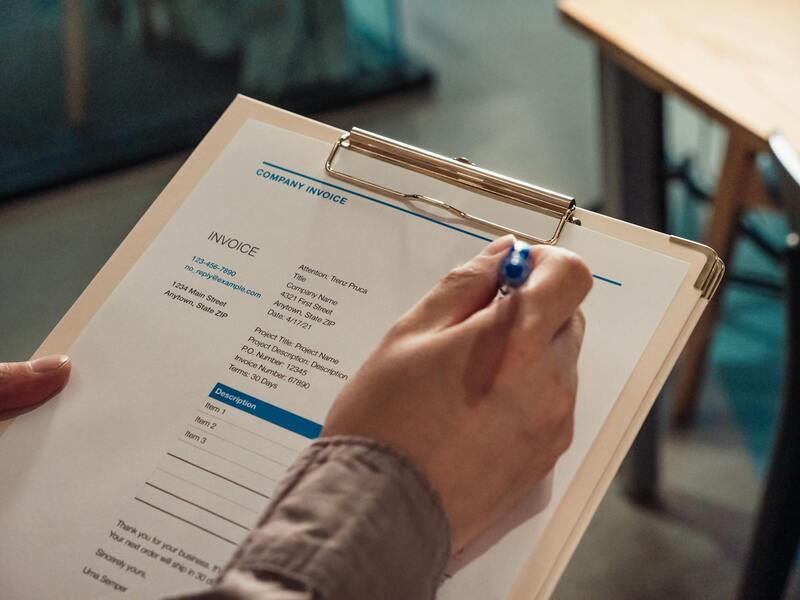
- If it needs to be written on. Ballpoint will not write reliably on laminated film. Reply cards, appointment cards and forms should be left unlaminated or given a writable coating.
- If recyclability matters. A plastic-laminated sheet is harder to recycle than plain paper. Biodegradable and recyclable film options exist and are worth asking about if this is part of your positioning.
- If the tactile quality of the paper is the point. Laminating a beautiful uncoated stock covers up exactly what you paid for. An uncoated sheet with no film often reads as more considered than a laminated one.
- If budget is tight and the piece is short-lived. A flyer handed out at one event and discarded that evening does not need protection.
- If turnaround is very tight. Lamination is a separate pass through a separate machine, and it adds time.
That last point matters for deadline work. If a job is already against the clock, dropping lamination can be what makes the date achievable. See express and fast printing for how that trade-off usually plays out.
Specifying it properly
Lamination is quoted per side, and the two sides do not need to match. However, mixed finishes are uncommon unless there are specific design reasons. When specifying lamination, please state:
- The type is gloss, matte, soft-touch, or anti-scuff.
- One side or both
- The weight of the film is significant because heavier film adds more rigidity and greater protection.
- Whether the piece will be folded after laminating, the creasing must be set up correctly.
- Whether any area needs to remain unlaminated, such as a writable panel.
If the job also includes spot UV or foiling, the sequence matters: these processes typically come after the lamination, and the type of film used affects how well these processes adhere. It's important to flag this at the quoting stage rather than after the sheets have been laminated.
Ask for a sample on your actual stock
A lamination sample on the printer's demonstration card gives you an idea of how the film feels. However, it does not show you how your dark blue will appear under matte film on your chosen paper. For any significant print run, request a sample using your artwork and the paper stock you have selected. On long runs, the cost of a sample is minimal compared to the overall job, and it helps resolve any color questions before the project becomes more expensive.
Finishing work with us
We laminate in-house, which means we can show you a sample on the actual stock before the job goes ahead, rather than just describing it. For jobs with heavy dark coverage, we usually recommend anti-scuff over plain matte. We will also let you know if we think lamination is not worth the money for your particular piece.
We also set the creasing to match the lamination, as a laminated cover that cracks at the fold is a finishing failure, not a paper issue. When a job requires a writable area, we mask it rather than laminating the entire sheet and hoping for the best.
Send us the artwork, the stock you have in mind and how the piece will be used, and we will tell you which finish fits. See binding and cover work under brochure and booklet printing, or the wider range under printing services. You can reach us through the contact page.
The short version
Gloss deepens color and resists handling, but it also reflects light and shows fingerprints. Matte eliminates glare and improves readability, but it lightens colors and scuffs easily. Soft-touch is a premium tactile finish that marks easily. Anti-scuff solves the scuffing problem on dark coverage at an extra cost. Skip lamination entirely if the piece needs to be written on, if recyclability is a concern, or if the paper itself is the feature.
Before a long run with matte or soft-touch finishes over dark solids, obtain a sample on your own stock. This is often the step that surprises people.