Understanding Colors Fprint: Printing Industry Color Management And Techniques
Overview of Colors Fprint in Printing
Colors fprint represents a fundamental aspect of the printing industry, encompassing a precise method for reproducing colors consistently across various printing mediums. This concept is integral to maintaining color fidelity, whether working within digital or traditional print environments. In practice, colors fprint involves utilizing sophisticated techniques, tools, and standardized processes to ensure that the colors envisioned during the design phase are accurately reflected in the final printed product. The significance of this process cannot be overstated, as it directly impacts brand identity, marketing efficacy, and customer satisfaction.

Within the printing industry, the endeavor to reproduce colors faithfully hinges on a thorough understanding of various color modes and profiles. These elements dictate how colors are interpreted, stored, and displayed during the printing process. The primary motivation behind colors fprint is to bridge the gap between digital color specifications and the tangible hues that emerge on print materials. Achieving this requires a comprehensive grasp of color science, material properties, and the technologies that enable precise color matching.
Colors fprint plays a crucial role in both offset and digital printing processes. In offset printing, for example, accurate color reproduction relies on carefully calibrated inks and precise registration techniques. Meanwhile, digital printing benefits from color management workflows that utilize embedded color profiles to ensure each print aligns with original digital designs. As the industry advances, the importance of consistent color reproduction grows, emphasizing the need for methodologies that establish predictable and uniform results.
Understanding the Role of Color Modes and Profiles in Printing
In the pursuit of precise color reproduction, the choice of color modes and profiles plays a pivotal role. The two most prevalent color modes in professional printing are CMYK and RGB, each serving specific functions within the workflow. CMYK, which stands for Cyan, Magenta, Yellow, and Key (Black), is optimized for subtractive color mixing used in most physical print processes. It allows printers to formulate a broad spectrum of colors through the layering of inks on substrates, ensuring that digital designs translate effectively onto paper or other materials.
On the other hand, RGB—Red, Green, Blue—is primarily used in digital displays and comes into play when digital files are prepared for print. While RGB can display a wider array of colors on screens, it requires conversion to CMYK for printing to ensure color accuracy. This conversion process is managed through embedded color profiles that standardize how digital colors are interpreted during printing. Ensuring the correct application of these profiles is essential for maintaining consistency and accuracy across different devices and print runs.
Color Profiles and Their Importance in Print Production
Color profiles serve as digital descriptors that define how colors should be interpreted by various devices, such as scanners, monitors, or printers. These profiles align the color representations from digital sources with the physical capabilities of printing equipment, facilitating consistent and predictable results. Managed through standards like ICC (International Color Consortium) profiles, they ensure that the hues you envision in your design translate accurately onto the final printed piece.
Accurate application of color profiles during the pre-press stage minimizes discrepancies between the intended colors and the printed output. This is especially critical when reproducing brand colors or complex artwork where even minor deviations can impact visual perception and brand integrity. Using calibrated monitors and properly embedded profiles within design software helps maintain a high level of color fidelity throughout the printing process.
Overview of Colors Fprint in Printing
Colors Fprint plays a crucial role in achieving precise color reproduction in commercial and professional printing environments. It encompasses a set of technologies and methodologies used to control and manage how colors are reproduced on various printing substrates. The core objective of Colors Fprint is to ensure that the final printed output accurately reflects the intended digital design, maintaining consistency across different print runs and media.
Practically, Colors Fprint involves a combination of color management systems, specialized printing inks, and calibrated equipment. These components work together to translate digital color data into physical representations that are visually consistent and true to the original design. This process is crucial for brand-sensitive applications, where color accuracy can significantly impact brand perception and product recognition.

Understanding the mechanisms behind Colors Fprint is essential for professionals seeking to optimize print workflows. It involves an interplay between digital color profiles, printer calibration, and quality control measures to minimize deviations during the transfer from digital file to physical print. The effectiveness of this system hinges on meticulous calibration and adherence to standardized color management protocols, ensuring each printed piece adheres to the original color specifications with minimal variance.
Color Modes and Profiles Used in Printing
When discussing Colors Fprint, it is important to understand the color modes and profiles in use during the printing process. Typically, printers operate using the CMYK color mode, optimized for subtractive color mixing on physical media. CMYK, which stands for Cyan, Magenta, Yellow, and Key (Black), allows for a broad spectrum of printable colors, closely matching what the human eye perceives.
In digital design, the RGB color mode (Red, Green, Blue) is often used, especially in screens and digital displays. Transitioning from RGB to CMYK involves converting color profiles through color management systems to ensure color fidelity. This transition relies heavily on embedded color profiles such as ICC profiles, which specify how colors should be interpreted and reproduced accurately during the conversion.
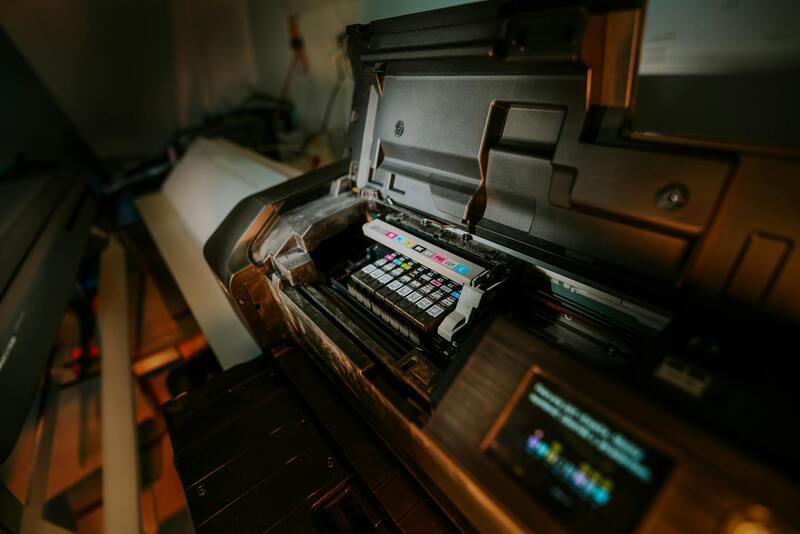
Color profiles serve as digital standards, providing a reference for color interpretation across different devices and platforms. Embedding the correct profiles within design files, combined with accurate calibration of the printing equipment, ensures that the hues and shades in the digital design are faithfully reproduced on the printed material, maintaining brand consistency and design integrity.
Color Management Workflow in Printing
The journey from digital design to physical print involves a structured workflow aimed at preserving color accuracy. This process begins with the calibration of monitors and devices involved in the creative process to establish a reliable baseline for color display and interpretation.
During pre-press, a soft proof—an on-screen preview—is used to simulate the final printed output. This step allows designers to identify and correct color discrepancies before the actual printing process begins. Embedding accurate ICC profiles into the design files is critical at this stage, as it guides the printer in reproducing the intended colors.
Finally, during the printing process, calibration of the printer and ongoing color checks are performed to ensure consistency. This includes color density measurements, use of color bars, and periodic maintenance. Such diligent management minimizes variations, ensuring that each printed batch matches the original design's color specifications with high fidelity.

Color Swatches and Spot Colors in Printing
Accurate color reproduction in commercial printing relies heavily on the use of standardized color references, known as color swatches, and spot colors. These tools serve as benchmarks that guide printers to achieve the intended hue, ensuring consistency throughout the print run. Color swatches are typically organized within color guides, with the Pantone Matching System (PMS) being among the most widely adopted frameworks. By referencing a specific Pantone color, designers and printers can communicate precisely which color is required, minimizing variability caused by differences in inks, paper, or printing equipment.
Spot colors are premixed inks that are used directly in the printing process without the need for color mixing during printing. This ensures a high level of accuracy and vibrancy, especially for logos, corporate colors, and branding elements that demand strict color fidelity. Printing spot colors correctly involves several key steps, including selecting the right color guides, creating accurate color swatches, and verifying color fidelity through calibration and proofing processes.
To reproduce these spot colors effectively, digital files must incorporate color profiles that specify the precise inks and shades. During the pre-press phase, color management systems help maintain the integrity of spot colors by ensuring that the digital representation matches the physical output. Additionally, calibration of printing equipment and routine use of color verification tools play crucial roles in maintaining consistency across multiple print jobs.
Tools and Techniques for Spot Color Accuracy
- Color swatch books and guides, such as Pantone, RAL, or specific brand catalogs
- Color calibration devices and spectrophotometers for verifying ink density and color fidelity
- Creating and printing test swatches to evaluate color match quality before the main print run
- Proper embedding of ICC profiles in digital files to communicate color intents to printers
These rigorous practices ensure that every printed piece meets the exact quantitative and qualitative standards set forth by design specifications. This approach is especially vital in industries where color precision directly impacts brand recognition and product consistency, such as packaging, labels, and high-end branding materials.
Color Modes and Profiles Used in Printing
Implementing accurate color reproduction in printing necessitates an understanding of the different color modes and profiles employed throughout the process. The most prevalent color modes are CMYK (Cyan, Magenta, Yellow, Key/Black), RGB (Red, Green, Blue), and Pantone spot colors, each serving specific purposes based on the material and desired outcome. CMYK is the standard for full-color printing, leveraging subtractive color mixing to produce a wide spectrum of colors on paper or other substrates. RGB, while primarily used for digital displays, plays a role in pre-press workflows where digital design files are converted before printing.
Color profiles function as sophisticated data sets that define how colors are rendered within a specific device's gamut. ICC (International Color Consortium) profiles establish a standardized way of communicating color data between devices, such as monitors, printers, and proofing systems. Ensuring that digital files carry embedded ICC profiles is essential for consistent color matching. For spot colors, often specified using Pantone or RAL color systems, dedicated color profiles and libraries are employed to translate these standardized shades across different printing technologies, maintaining their integrity regardless of the printing method used.
Color Management Workflow in Printing
The pathway to achieving precise color reproduction involves a meticulous color management workflow, beginning with accurate scanning or digital design creation. Designer files are prepared with embedded ICC profiles compatible with the intended printing process. During pre-press, proofing and calibration are conducted to ensure that the digital representation closely matches the expected physical output. Calibration tools, such as spectrophotometers, are used regularly to verify ink densities and color consistency across print runs.
Throughout the printing process, printers are calibrated frequently using standard test charts to minimize color deviations. The use of soft proofing allows for digital simulation of the final print, enabling adjustments to be made before actual production. Final color fidelity is validated by comparing printed samples with digital proofs, ensuring that color specifications are met accurately. This continuous calibration and verification cycle guarantees uniformity across multiple print batches, especially critical when reproducing spot colors or complex multi-color schemes.
Color Swatches and Spot Colors in Printing
Color swatches and spot colors are crucial for projects requiring exact color matches. Swatch books, such as Pantone, RAL, or custom brand palettes, serve as physical references for designers and printers to communicate color intents with precision. To reproduce these shades effectively, the digital files incorporate specific color profiles and spot color channels, which specify the exact inks and shades to be used during printing.
Printing with spot colors involves creating additional imaging layers dedicated to these inks, which are then applied in precise quantities using calibrated presses. Proper management of these colors involves embedding ICC profiles that relate digital spot color definitions to physical inks and performing pre-press proofing with color swatches to confirm accurate reproduction. Test swatches are invaluable, as they provide visual confirmation, ensuring the final print matches the predefined color standards. Accurate spot color reproduction not only enhances brand consistency but also reduces material waste caused by color mismatches.
Tools and Techniques for Spot Color Accuracy
- Color swatch books such as Pantone, RAL, or custom color guides
- Spectrophotometers and color calibration devices for precise color measurement
- Soft proofing software to simulate print results digitally
- ICC profiles embedded in digital files and printer calibration tools
- Creating and printing test swatches for validation before large runs
Leveraging these tools and techniques ensures spot colors are reproduced with high fidelity, meeting exacting standards required in sectors like packaging, branding, and high-end product labeling. Consistent application of these methods across production runs maintains color integrity, bolstering brand recognition and consumer trust.
Overview of Colors Fprint in Printing
Colors Fprint refers to the precise process of reproducing colors accurately during printing, ensuring that digital designs match physical outputs. This process incorporates a systematic approach involving reference standards, color calibration, and verification methods that uphold color fidelity across various media. Implementing effective color Fprint techniques is critical in industries where brand integrity and visual consistency are paramount, such as packaging, signage, and promotional materials. The overarching goal of Colors Fprint is to minimize tonal deviations, reduce waste, and achieve a uniform appearance in large-scale production. This is achieved through meticulous calibration and the utilization of specialized tools to simulate the final output during the pre-press stage, enabling adjustments before the actual print run. By understanding and adhering to optimal color reproduction strategies, printing professionals can foster greater consumer trust and elevate their product quality standards.

Color Modes and Profiles Used in Printing
Color modes define how colors are represented in digital and print workflows. The most common color modes in printing include CMYK, RGB, and Pantone spot colors. Each mode serves specific functions based on material, process, and desired color fidelity:
- CMYK: Comprises Cyan, Magenta, Yellow, and Key (Black). This subtractive color mode is fundamental in color printing, especially for full-color images and photographs, enabling wide color gamut and precise color blending.
- RGB: Consisting of Red, Green, and Blue, this additive color mode is primarily used for digital displays but can be converted into CMYK for printing purposes, often with slight color adjustments due to gamuts differences.
- Spot Colors (Pantone, RAL): Specific pre-mixed inks used for achieving exact color matches, especially critical for brand colors and logos requiring consistency across print runs.
Equally important are color profiles, such as ICC profiles, which encode color attributes for devices and workflows. They enable consistent color rendition by translating color data between digital files and physical output devices, ensuring visual accuracy and repeatability.
Color Management Workflow in Printing
A robust color management workflow maintains color accuracy throughout the printing process, from digital design to final print. This workflow typically involves these essential steps:
- Design creation: Using color-managed software that supports specific color profiles, ensuring initial digital data is accurately prepared.
- Soft proofing: Utilizing monitor calibration and soft proofing software to simulate how colors will appear when printed, allowing adjustments beforehand.
- Color calibration: Calibrating printers and devices using standardized targets and spectrophotometers to establish baseline color settings.
- Color profiling: Embedding ICC profiles into digital files and applying them during printing to maintain consistency.
- Proofing and validation: Producing test prints and comparing samples against color swatches and standards for quality control.
- Final production: Executing the print run with continual monitoring and adjustments to uphold color fidelity.
Transitioning smoothly through these phases ensures that colors reproduced in print align with original digital designs, reinforcing visual branding and reducing costly reprints.

Color Swatches and Spot Colors in Printing
Color swatches serve as physical references that guide the exact reproduction of specific hues. Popular guidelines include Pantone, RAL, and custom color books, which offer a standardized set of hues validated for print accuracy. Spot colors are widely used in branding to ensure color consistency across different print batches and media. They offer advantages such as:
- High precision in reproducing specific colors
- Reduced color variation over large runs
- Brand integrity preservation through exact matching
To achieve precise application of spot colors, techniques such as creating dedicated printing plates, using calibrated inks, and applying ICC profiles are employed. Printing test swatches and measuring their colorimetric accuracy with spectrophotometers are pivotal steps in validating the results before comprehensive production begins.
Techniques for Achieving Accurate Colors in Prints
Ensuring color precision involves applying official methods and leveraging specialized tools:
- Use of standardized color guides: Pantone guides and RAL charts facilitate quick referencing and matching of colors with pre-mixed inks.
- Spectrophotometric measurements: Instruments like spectrophotometers provide detailed color data that help in adjusting ink mixes and printer settings for optimal accuracy.
- ICC profile application: Embedding accurate color profiles into design files ensures consistent color translation during printing.
- Pre-press proofing: Producing and reviewing test swatches allows for all necessary adjustments before the final run, minimizing errors.
- Color management software: Programs capable of soft proofing, color calibration, and simulation help predict and correct potential discrepancies.
- Regular calibration of equipment: Maintaining printer and monitor calibration guarantees ongoing color fidelity during production cycles.
By systematically implementing these practices, print professionals can attain high levels of color accuracy, meeting stringent quality expectations in all client projects.
Overview of Colors Fprint in Printing
Colors Fprint serves as a pivotal technique within the printing industry, facilitating precise color reproducibility and consistency across various print jobs. This method focuses on accurately capturing, replicating, and controlling colors to achieve a high-quality finish that aligns with client specifications. By employing standardized practices, Colors Fprint ensures that the hues used in print materials are consistent, whether the output involves small batches or high-volume production runs. The core of this process involves meticulous color measurement and management, leveraging specialized tools and adhering to well-established industry protocols.
Color Modes and Profiles Used in Printing
Integral to the Colors Fprint methodology is the utilization of specific color modes and ICC (International Colour Consortium) profiles. CMYK (Cyan, Magenta, Yellow, and Key/Black) remains the standard color mode for most commercial printing tasks, providing a broad color spectrum necessary for detailed image reproduction. Additionally, RGB (Red, Green, Blue) color profiles are often used during the digital design phase, with careful conversion to CMYK before printing to prevent color shifts.
ICC profiles play a crucial role by defining the color attributes of the device—be it a monitor, printer, or proofing system. Embedding these profiles within digital files ensures that color management workflows maintain uniformity from design to final print. These profiles assist in compensating for device-specific color gamuts, enabling printers to produce accurate and predictable color outcomes across different media and substrates.
Color Management Workflow in Printing
The process begins with the calibration of all devices involved—monitors, scanners, and printers—to a unified baseline. Next, a color profile specific to the printing device and substrate is created or selected. Design files are then converted into the chosen color space, typically adhering to embedded ICC profiles that define how colors should appear when printed. During pre-press, proofing systems generate test prints, which are measured with spectrophotometers to compare actual colors against target values.
This workflow emphasizes consistency by incorporating regular calibration and measurement steps, ensuring that each stage maintains the desired color fidelity. When discrepancies are identified, adjustments are made to ink formulations or printer settings, guided by data obtained from spectral measurements.
Color Swatches and Spot Colors in Printing
Precise color matching is often achieved through the use of dedicated color swatches and spot colors, with Pantone being the most recognized system. Spot colors are specially mixed inks designed to produce a specific hue that cannot be reliably achieved through process colors alone. Printing with spot colors involves creating a dedicated ink mix tailored for that particular color, ensuring consistency across different print runs and substrates.
Designers and print professionals utilize color swatches as physical and digital references, allowing for accurate selection and matching of colors during the pre-press stage. The implementation of spot colors is especially critical in branding and luxury packaging, where color consistency is a key brand attribute.
Techniques for Achieving Accurate Colors in Prints
Achieving color accuracy involves a comprehensive approach that integrates several standardized methods and tools:
- Standardized Color Guides: Pantone, RAL, and other color guides provide authoritative references for color matching, enabling the formulation of inks that match designated hues.
- Spectrophotometry: Instruments like spectrophotometers are used to measure the spectral reflectance of printed samples, allowing precise adjustments to ink mixes and print settings.
- ICC Profile Embedding: Embedding ICC profiles within design files helps maintain color integrity during color conversions and output processes.
- Pre-press Proofing: Generating and reviewing accurate proof prints enables detection and correction of color discrepancies before bulk production, reducing waste and ensuring quality.
- Color Management Software: Advanced software solutions facilitate soft proofing, color calibration, and simulation, providing visual confirmation of expected output colors and reducing trial-and-error.
- Equipment Calibration: Regular calibration routines for printers and monitors guarantee ongoing color consistency, minimizing drift over production cycles.
By systematically employing these strategies, printing professionals can reliably reproduce precise colors, fulfilling strict quality requirements demanded by clients and ensuring brand fidelity.
Comprehensive Strategies for Managing Colors Fprint Accurately
Effective management of colors fprint is critical in delivering high-quality printed materials that meet stringent color standards. To achieve consistent results, professionals rely on a combination of precise calibration, comprehensive color profiling, and detailed workflow integration. Regular calibration of printers and monitors ensures that output devices operate within specified color parameters, reducing color drift over time. Embedding ICC profiles into design files maintains color integrity during file transfer and printing, facilitating predictable color reproduction across different devices and media.
A critical step involves standardizing the color input and output environment. This includes establishing a controlled lighting environment in the print workspace and utilizing standardized color targets and reference materials. These targets serve as benchmarks, allowing operators to verify and adjust output to match the desired color specifications accurately. Software solutions incorporating built-in color management workflows automate the process, providing visual aids such as soft proofing tools that simulate how colors will appear when printed, enabling quick and precise adjustments.
Utilizing Color Matching and Consistency Techniques
Addressing color variations starts with meticulous color matching techniques. Spot color systems like Pantone provide predefined hues that simplify consistent color reproduction by matching inks to specific color standards. When reproducing complex or brand-specific colors, spot colors are often used in conjunction with process colors to fine-tune the final hue. These strategies are complemented by the use of digital color libraries and swatch books, which serve as physical and digital references for printers and designers alike.
Advanced color management tools enable operators to monitor and control the color output throughout the printing process. These tools include spectrophotometers, which measure the spectral reflectance of printed samples, and software that analyzes this data to suggest precise ink adjustments. Such real-time feedback allows for corrections during the production cycle, significantly reducing waste and reprint frequency. Consistency is further secured through routine calibration and maintenance schedules, ensuring that the printing system maintains its performance over time.
Implementing Technical Solutions for Color Fidelity
Modern printing workflows incorporate sophisticated software solutions that facilitate seamless color management. These platforms offer features like ICC profile creation and embedding, color gamut mapping, and automated color matching. By employing these tools, print houses can safeguard color accuracy from pre-press to final output, reducing human error and variability. Some solutions also support cloud-based color data sharing, allowing remote monitoring and management of color consistency across multiple print sites.
Adopting these official methodologies and state-of-the-art tools positions printing professionals at the forefront of color fidelity, ensuring that every project aligns with client expectations and maintains the integrity of brand colors. This integrated approach underscores the importance of precision, routine quality checks, and technological advancement in managing colors fprint effectively across diverse printing environments.